
Are your serrated steak knives struggling to cut through meat like they used to? Dull blades can make meal prep frustrating and affect the taste of your favorite dishes.
But don’t worry—you don’t need to buy new knives or pay for expensive sharpening services. With the right method, you can easily sharpen your serrated steak knives at home. In this guide, you’ll discover simple, effective steps to bring back the sharpness your knives need.
Keep reading to learn how to make every cut effortless and precise again.
Choosing The Right Tools
Choosing the right tools is essential to sharpen serrated steak knives effectively. These knives have unique teeth that regular sharpeners can’t handle properly. Using the correct tool ensures you maintain the blade’s integrity while restoring its cutting power.
Think about how often you use your steak knives. Are you willing to invest in a quality sharpener that fits the serrations perfectly? The right tool not only saves your knives but also makes the sharpening process quicker and safer.
Types Of Sharpeners For Serrated Knives
There are several sharpeners designed specifically for serrated edges. Most have a tapered or pointed shape to fit between the teeth of your steak knife. Choosing between manual and electric sharpeners depends on your comfort level and budget.
- Manual Sharpeners:These sharpeners usually have ceramic or diamond-coated rods and give you more control over the sharpening angle.
- Electric Sharpeners:They offer convenience but may not always align perfectly with the serrations, risking uneven sharpening.
Which type feels easier for you to handle? Your choice affects the sharpness and lifespan of your knife.
Using A Ceramic Rod
Ceramic rods work great for serrated knives because they are gentle yet effective. Their fine surface smooths out the blade without removing too much metal. Plus, ceramic rods are affordable and easy to store.
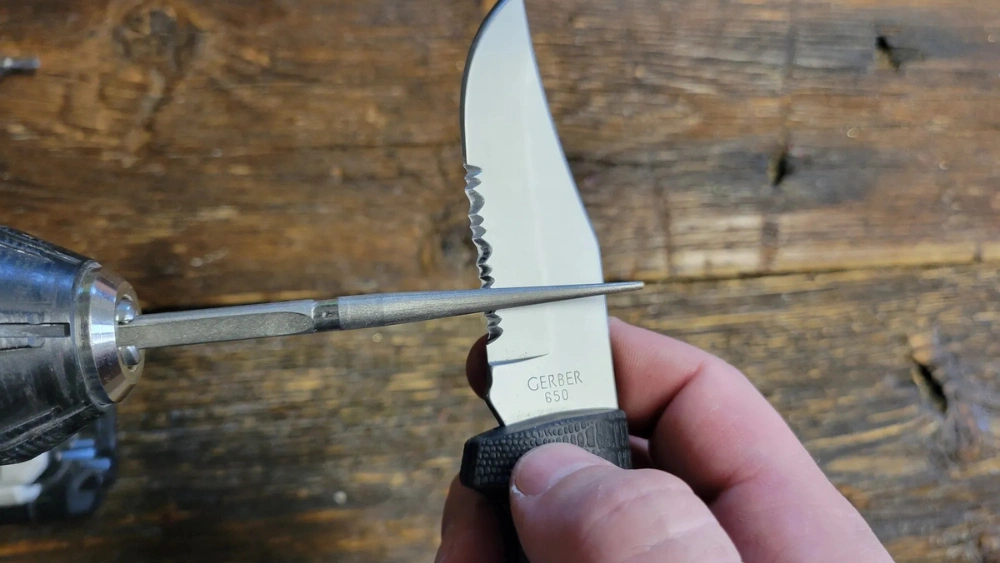
I once used a ceramic rod to sharpen my serrated steak knives and noticed a big improvement after just a few strokes. It felt like the knife regained its original bite without the hassle of complicated tools. Try holding the rod at the same angle as the serration and gently slide it through each tooth.
Alternative Sharpening Tools
If you don’t have a ceramic rod, other tools can help maintain your serrated knives. A small diamond-coated rod or a specialized serrated knife sharpener can work well. Some kitchen stores even offer sharpening services if you prefer professional help.
- Diamond-coated rods provide a more aggressive sharpening action for very dull knives.
- Sharpening systems with adjustable angles can adapt to different serration sizes.
- Professional sharpening services ensure precision but come with a cost and waiting time.
What’s your comfort level with DIY knife sharpening? Your choice of tools should match your confidence and how often you plan to sharpen your knives.
Preparing Your Knife
Preparing your serrated steak knife is the key to a smooth sharpening process. A clean, stable knife helps you work safely and get the best edge. Taking time to prepare avoids damage and keeps you safe.
Cleaning The Blade
Start by washing the knife with warm water and mild soap. Remove all food particles and grease. Dry the blade thoroughly with a soft cloth. A clean blade shows the serrations clearly for precise sharpening. Avoid using harsh chemicals that can harm the blade.
Securing The Knife Safely
Place the knife on a flat, stable surface. Use a clamp or a non-slip mat to hold it steady. Keep the blade edge facing away from you. Secure the handle firmly to avoid slipping. Stability is important to sharpen evenly and prevent accidents.
Sharpening Techniques
Sharpening serrated steak knives needs special care. These knives have small, curved teeth that cut meat easily. Regular sharpeners do not work well on serrated edges. Using the right techniques keeps the teeth sharp and effective.
Identifying The Beveled Edge
Each serration has a beveled edge on one side. This side is sharper and angled. The other side is usually flat or less angled. Knowing which side is beveled helps you sharpen correctly. Look closely at the blade under good light. The beveled edge is where you run the sharpener.
Sharpening Each Serration
Use a small round sharpening rod or a tapered diamond file. Match the size of the rod to the serration size. Sharpen each tooth gently, one by one. Slide the rod inside the curve of each serration. Use light pressure and pull the rod through the edge. Avoid sharpening the flat side to keep the shape intact.
Maintaining The Original Angle
Keep the sharpening rod at the same angle as the beveled edge. Usually, this angle is around 15 to 20 degrees. Holding the rod at the original angle prevents damage. It also ensures the knife stays sharp longer. Consistent angle control leads to even sharpening across the blade.

Credit: imarku.net
Finishing Touches
After sharpening your serrated steak knives, the finishing touches are what truly bring out their peak performance. These final steps ensure your blades are safe, clean, and razor-sharp. Skipping them can leave your knives feeling rough or less effective despite your hard work.
Removing Burrs
Sharpening often creates tiny metal burrs along the edge. These small rough spots can dull the cutting experience and even cause minor injuries. To remove them, gently run the flat side of the knife against a fine-grit sharpening stone or use a honing rod with light pressure.
This simple step smooths out the edge and enhances precision. You’ll notice your knife glides effortlessly through steak after this. Don’t rush; take your time to feel for any remaining burrs by lightly running your finger along the blade’s edge (carefully, of course).
Testing Sharpness
Wondering if your knife is truly sharp? A reliable way to test is by slicing through a piece of paper or a tomato. If the knife cuts cleanly without tearing, you’ve done a great job.
Try slicing a thick steak next to see if the knife glides through the meat without much force. If it struggles, you might need to sharpen a bit more. Testing sharpness regularly helps you keep your knives in optimal condition and prevents frustrating kitchen moments.
Cleaning After Sharpening
Cleaning your knives after sharpening is often overlooked but extremely important. Metal particles and residue from sharpening tools can stick to the blade and cause rust or contamination.
Wash your knife with warm, soapy water and dry it thoroughly right after sharpening. Avoid putting freshly sharpened knives in the dishwasher; hand cleaning preserves the sharp edge longer.
Keeping your serrated steak knives clean after sharpening extends their lifespan and keeps every cut smooth and safe. How often do you clean your knives after use? Making it a habit can save you time and money in the long run.
Maintenance Tips
Keeping your serrated steak knives sharp requires more than just occasional sharpening. Regular maintenance protects the blade’s edge and extends the knife’s life. Simple habits can keep your knives ready for every meal.
Regular Honing
Honing straightens the serrated edges between sharpenings. Use a ceramic honing rod or a specially designed serrated knife sharpener. Gently run the honing tool along each scallop of the blade. Do this every few uses to keep the edge aligned and effective.
Proper Storage
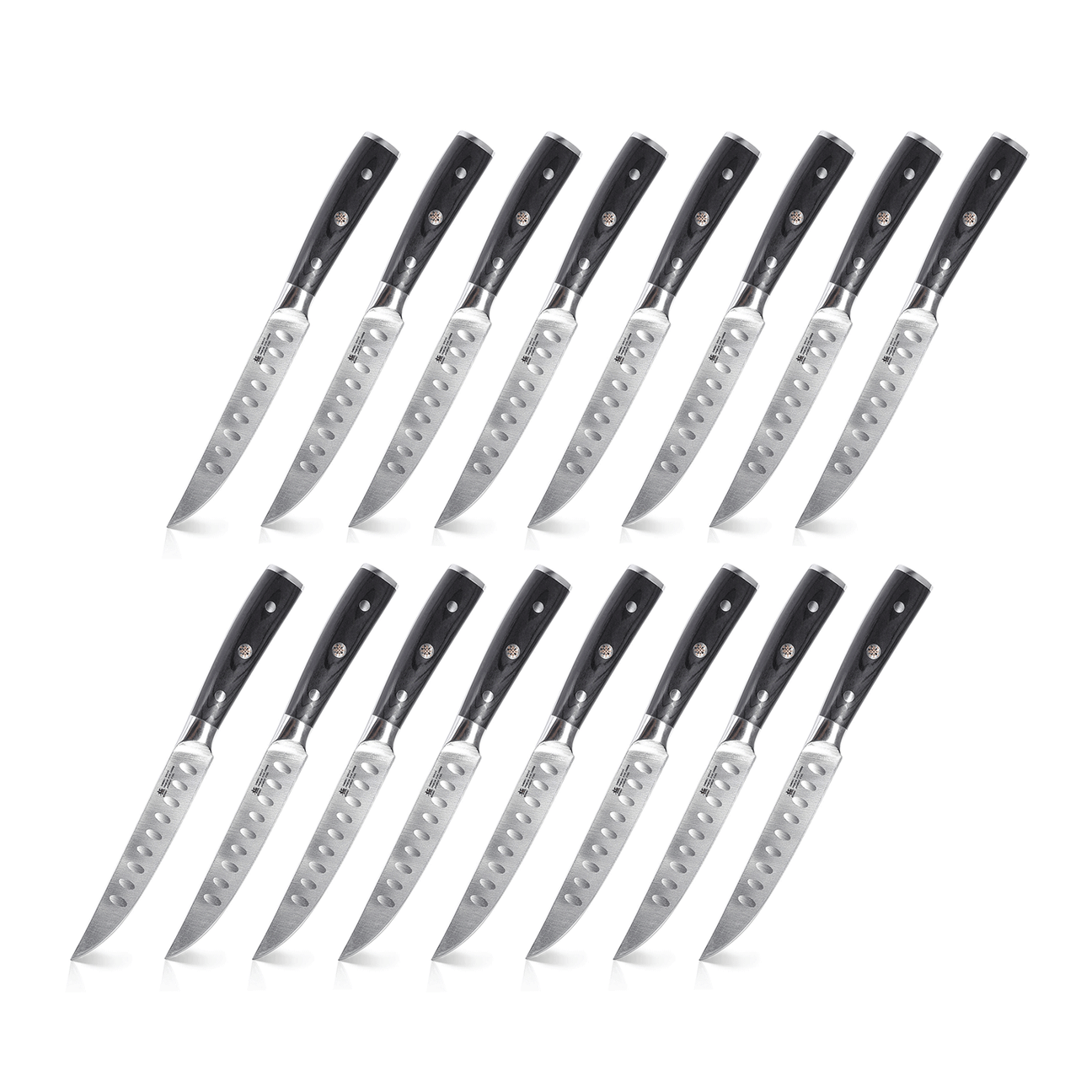
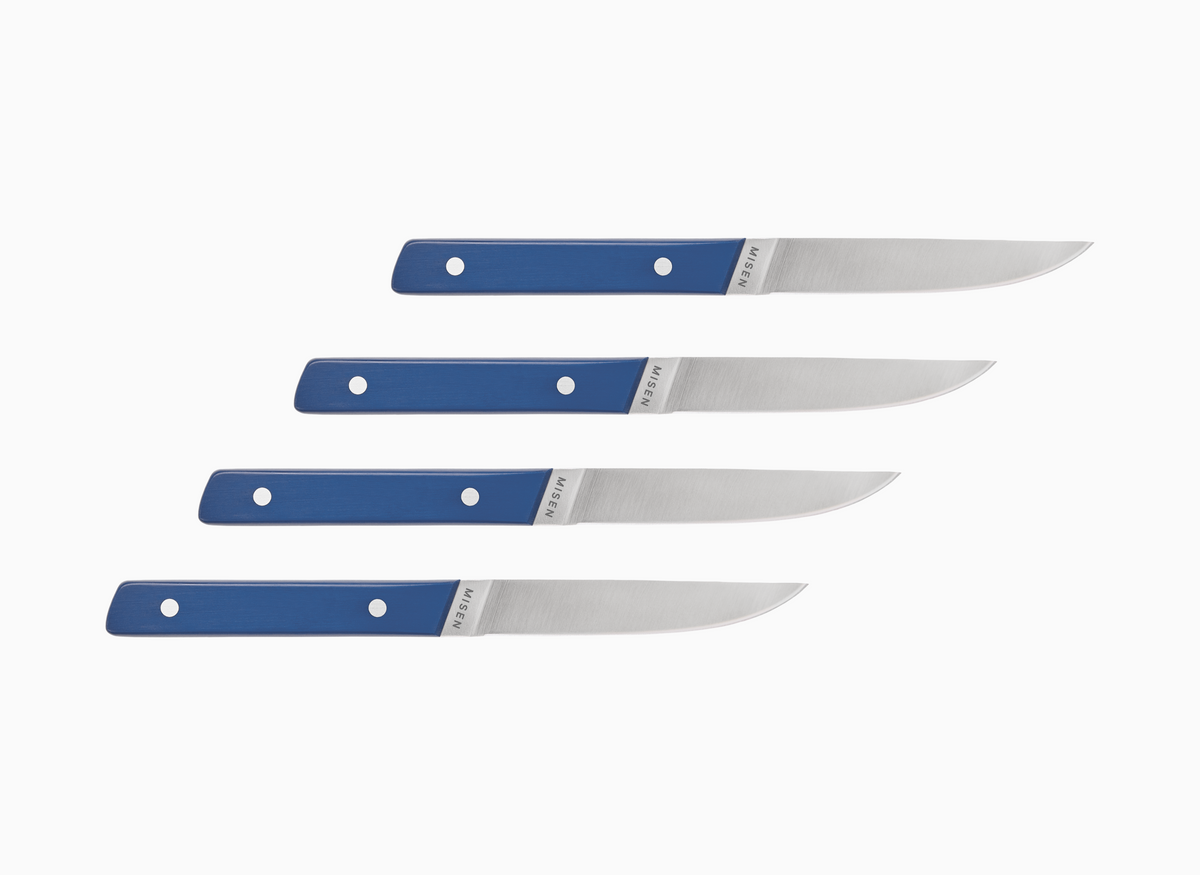
Store serrated steak knives carefully to avoid dulling or damage. Use a knife block with slots or a magnetic strip. Keep blades separated to prevent them from knocking against other utensils. Wrapping knives in soft cloth also protects the edges during storage.
When To Seek Professional Sharpening
Professional sharpening is needed when the blades become too dull or damaged. Look for signs like difficulty cutting or jagged edges. Experts use special tools to restore the serrations accurately. This service should be done once or twice a year, depending on use.
Credit: kyokuknives.com
Credit: misen.com
Frequently Asked Questions
How Do You Sharpen Serrated Steak Knives At Home?
Use a ceramic sharpening rod to sharpen each serration individually. Slide the rod through each groove carefully at the same angle. This method preserves the knife’s edge without damaging the serrations. Regular sharpening keeps your steak knives sharp and effective.
Can I Use A Regular Sharpener On Serrated Knives?
No, regular sharpeners can damage serrated edges. Serrated knives require specialized tools like a ceramic rod. These tools fit into the grooves and sharpen precisely. Using the wrong sharpener can ruin your knife’s cutting performance.
How Often Should Serrated Steak Knives Be Sharpened?
Sharpen serrated steak knives every 6 to 12 months. Frequent use may require more frequent sharpening. Regular maintenance keeps edges sharp and extends knife life. Avoid over-sharpening to preserve blade integrity.
What Tools Are Best For Sharpening Serrated Steak Knives?
The best tools are ceramic sharpening rods or tapered diamond rods. These fit serrations perfectly and provide precise sharpening. Avoid flat sharpeners or whetstones that don’t reach the grooves. Proper tools ensure effective and safe sharpening.
Conclusion
Sharpening serrated steak knives keeps them working well longer. Use the right tools and take your time. Small, careful strokes bring back the sharp edge. Regular sharpening makes cutting easier and safer. Clean your knives after sharpening to avoid rust.
A sharp serrated knife slices meat smoothly every time. Practice a little, and it will feel simple. Keep your knives sharp, and enjoy better meals.